
Sun safety and skin checks: protecting your skin this summer
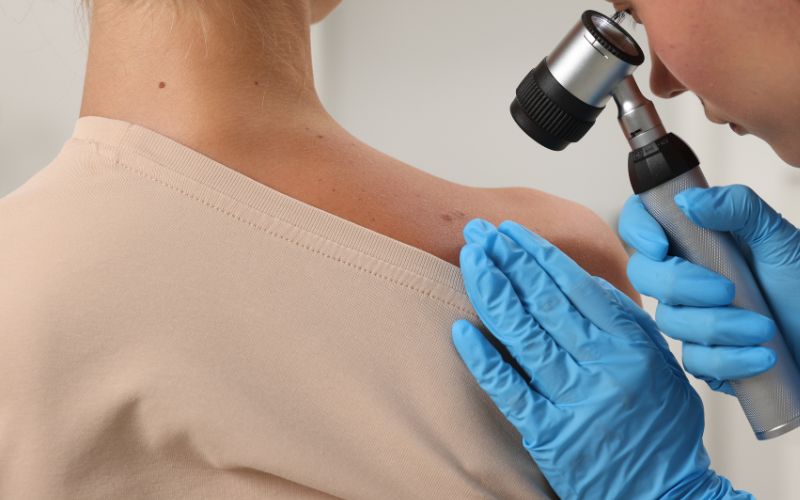
As UK temperatures hit new highs and the summer holiday season begins, sun safety moves from background concern to active priority. Recently observed Sun Awareness Week is an annual reminder that skin cancer is the most common cancer in the UK and that the vast majority of cases are linked to ultraviolet radiation exposure. The encouraging news is that, with the right habits and timely medical review, the risks can be substantially reduced.
Sun protection is a year-round conversation
At GP London W1 on Harley Street, we offer dermatology consultations and skin assessments led by clinicians with a specialist interest in skin health. This post sets out the key steps every patient should take as the weather warms and skin spends more time in the sun.
Getting SPF right
Sunscreen is one of the most effective tools available for reducing UV damage, but it is frequently misapplied. The NHS recommends using a broad-spectrum sunscreen of at least SPF 30 for everyday use, and SPF 50 for prolonged sun exposure, holidays, or outdoor sports. Broad-spectrum protection means the product shields against both UVA rays, which cause ageing and contribute to skin cancer, and UVB rays, which cause burning.
The amount applied matters as much as the SPF number. Most people apply far less sunscreen than the amount used in clinical testing, which means they are effectively using a lower protection factor than the label suggests. A generous, even application to all exposed skin, including the ears, the back of the neck, the tops of the feet, and the scalp, if relevant, is the goal. Sunscreen should be applied 20 to 30 minutes before sun exposure and reapplied every two hours, or immediately after swimming or heavy sweating.
Sun-protective clothing, wide-brimmed hats, and sunglasses with UV400 protection all contribute to overall defence. Seeking shade between 11am and 3pm, when UV radiation is strongest, remains one of the most effective measures of all.
Mole monitoring: what to look for
Most moles are completely harmless, but changes in appearance can sometimes indicate that cells are behaving abnormally. The ABCDE framework is a useful starting point for self-monitoring.
- Asymmetry, where one half of a mole does not mirror the other, is worth noting.
- Border irregularity, meaning ragged, notched, or blurred edges rather than a smooth outline, is another signal.
- Colour variation within a single mole, particularly the presence of multiple shades of brown, black, red, or white, warrants attention.
- Diameter larger than 6mm, roughly the size of a pencil eraser, is a guide, although melanomas can be smaller.
- Evolution, meaning any change in size, shape, colour, or any new symptom such as bleeding or itching, is perhaps the most important factor of all.
It is good practice to check your skin monthly, in good light, using a mirror for hard-to-see areas such as the back. Photographing moles periodically allows you to track any changes over time. If you notice anything that concerns you, or if a mole simply does not look the way it used to, the right course of action is to have it assessed by a clinician rather than wait and see.
When to see a GP about your skin
Many patients delay seeking a skin assessment because they are unsure whether a mole or lesion is serious enough to warrant a consultation. The straightforward answer is that if something has changed, is new, or is bothering you, it is always worth having it looked at. Skin conditions caught early are far more straightforward to treat than those left to develop.
At GP London W1, our dermatology service is led by Dr Shuting Xiong, whose specialist interests include dermatology and lifestyle medicine. Dr Xiong brings a thorough, patient-centred approach to skin assessments, combining clinical expertise with an understanding of each patient’s broader health context.
Whether you have a changing mole, a new lesion, a persistent rash, or a long-standing skin condition you have never had properly reviewed, our dermatology service at 25 Harley Street offers prompt, specialist assessment without a long wait.

